Project concept

For this project we have been asked how we would bring Portuguese culture into a city like Manchester. This will later be translated into an existing building. Our first area of research is to create a small film based on our own findings of Portuguese culture such as music, dance, food, Architecture etc to create a certain mood that we would like to portray to any audience.

Wednesday, 16 November 2011

First buildings/initial research for site ideas


http://www.museudofado.pt/

http://www.rncm.ac.uk/whats-on-mainmenu-47.html

http://www.cornerhouse.org/

Escola Superior de Musica de Lisboa (website in Portuguese)

Here are some links to websites showing my initial ideas on what sort of concept I would like my project to follow. As my main interest was with music within Portuguese culture I decided to research buildings that had similar concepts, starting with Manchester I looked at the Corner house although this is not just music it has quite a diverse range of topics such as art and film as well as having a cafe/restaurant area. I then decided to go on and look at music museums in Portugal and came across Museo Do Fado which is self explanatory really in that it is a museum of music and instruments of music. As I had done a museum already with my last project I didnt want to end up using the same theme this time round purely so I didnt get bored. I then came up with the idea that my space could be a Portuguese music school, where people of all races/background could attend, they would pay a fee like a student and be taught by Portuguese teachers different types of Portuguese music/instruments/singing lessons/language lessons. Maybe the students could live on site and could be hired to perform at other venues or even on site in a specially designed room or as the winery is already there I could add a cafe/Restaurant and the students could perform there to paying customers. I then looked at RNCM in Manchester which is obviously on a much larger scale but shows the same sort of theme.

Manchester Cathedral Visitor Centre - The Bridge

Although the project is not based on the Hanging bridge and the surrounding area I thought it was relevant to research a small amount of history in order to place portuguese culture within the Mynshull building correctly. Above is a video about Manchester cathedral and the bridge that runs beneath Mynshull house.
http://www.youtube.com/watch?feature=player_embedded&v=LzetyhsfCLo

Tuesday, 15 November 2011

Hanging Bridge aka Mynshull's House (project site)

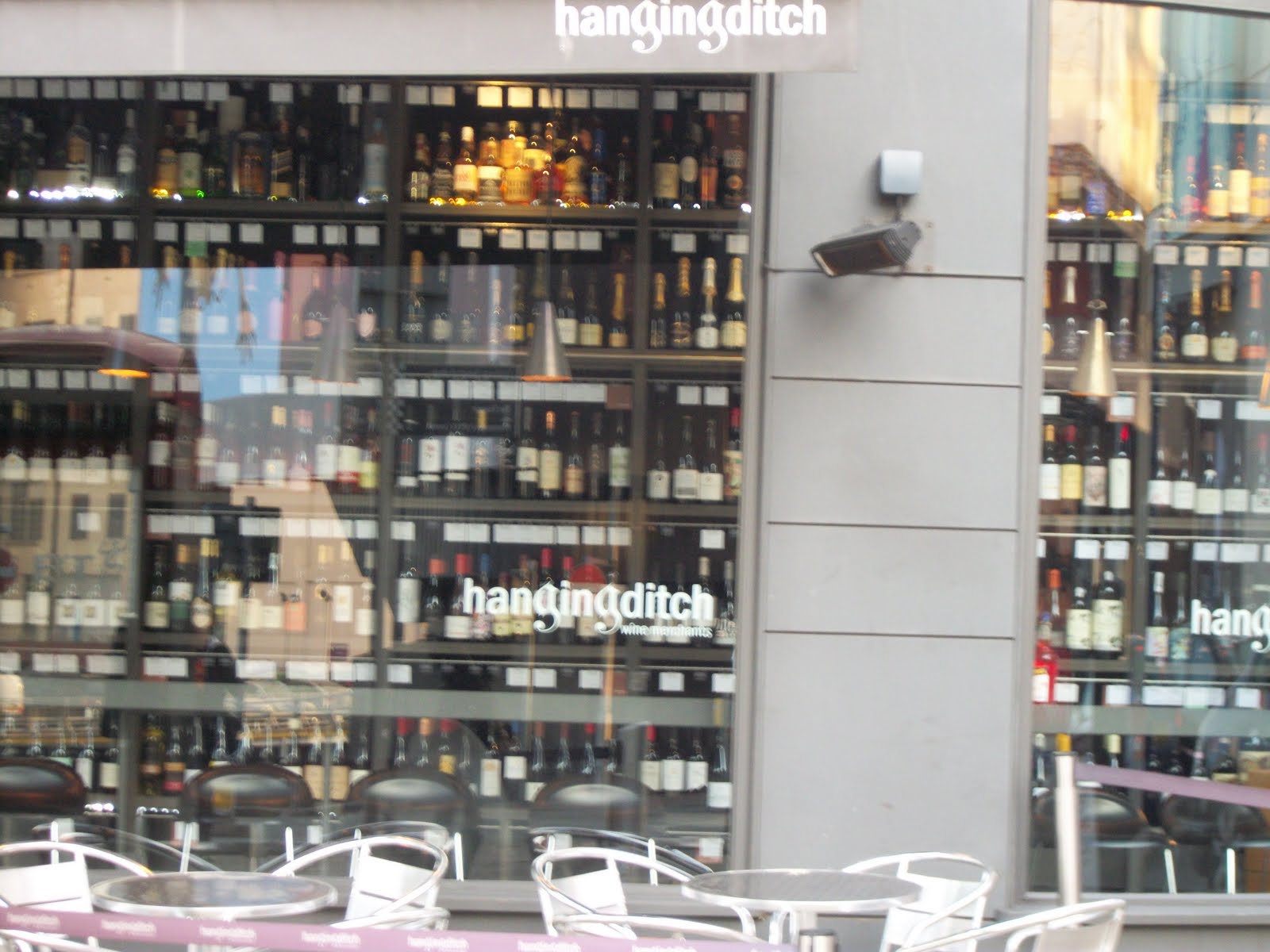
The Manchester group visited the site today, below are some of the pictures I have taken of both the site and the surrounding area. Although written on the side of the building are the words "Hanging Bridge" it is not actually the name of the building. The name is that of the bridge (1343) that runs beneath the building and through the chapel which has had a change of name at least three times to date, the words derived from the Old English 'hen', meaning wild birds, and the Welsh 'gan', meaning between two hills ( Hengand brigge). The name of the site we are studying is actually called Mynshull's House believed to be from the 1890's (rebuilt in red sandstone with terracotta embelishments)but founded in 1682 originally , a grade two listed building, owned by a chemist that gave apprenticeships to poor sound and healthful boys of Manchester. joint as part of the same building is a winery "the hanging ditch". Both the building and the bridge have a long and interesting history which unfortunately will not be looked at in this project but I do look forward to incorporating Portuguese culture into it, hopefully being able to keep many of its original features.


Monday, 14 November 2011

My interpretation on Portuguese culture

After gathering all my research I put together a small film to best describe my interpretation of Portuguese culture. I tried to create a few different moods within the film: the first section showing daytime Portugal with slow relaxing music, the second section showing carnival and festivals with a more upbeat soundtrack, third section is food and Fado music to show how they eat tea later in the day usually within small bars or restaurants playing fado music and finally the fourth section shows maybe leaving and walking into the street to hail a cab to end the night.